
How to Compare Two Residential Projects Beyond Price and Amenities
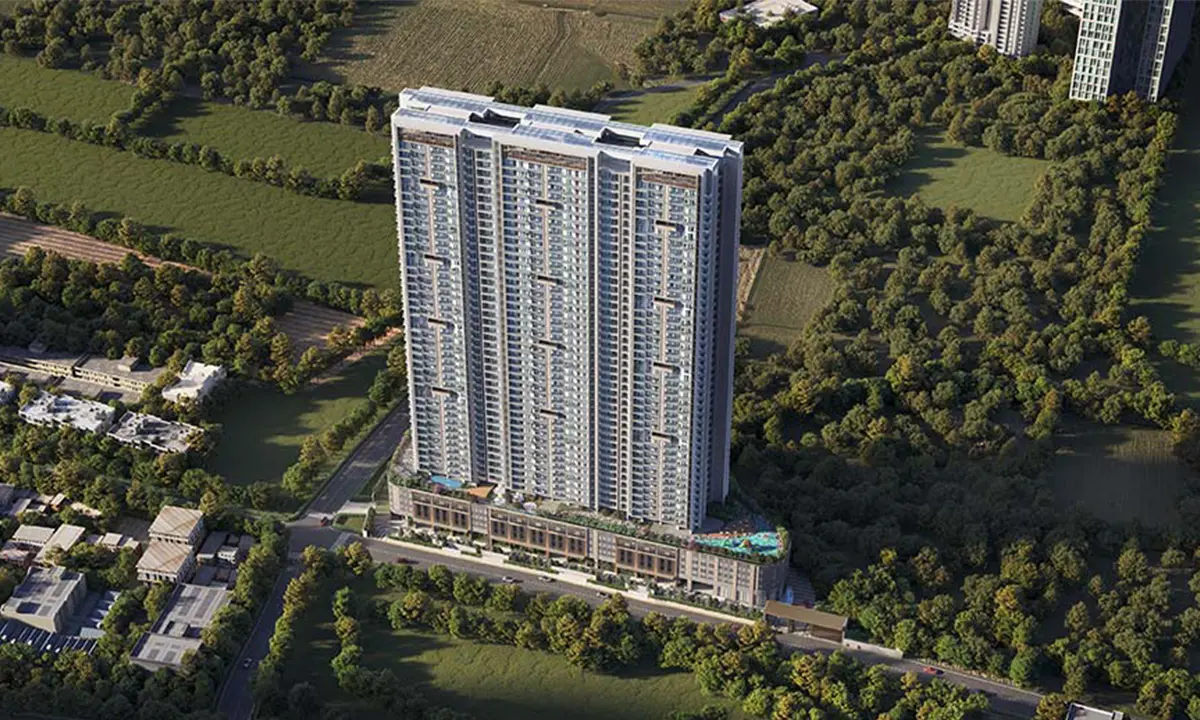 How to Compare Two Residential Projects Beyond Price and Amenities
Buying a home is one of the biggest financial decisions most people make. When comparing two residential projects, buyers often start with the same questions: Which one costs less? Which one offers more amenities? Does one have a swimming pool, clubhouse, gym, or landscaped garden that the other lacks?
These are useful questions, but they do not tell the whole story.
A residential project is more than a price tag and a list of facilities. Its location, construction quality, legal approvals, developer track record, apartment layout, maintenance costs, possession timeline, and long-term usability can affect your experience for years.
For example, Project A may offer a lower starting price and a larger clubhouse. Project B may have a more practical layout, better connectivity for your daily commute, and clearer documentation. Which one is the better choice? The answer depends on your needs, financial position, and long-term plans.
At Satya Group, we believe that homebuyers should evaluate a property from multiple angles before making a decision. This guide explains how to compare two residential projects beyond price and amenities, so you can make a more informed choice.
1. Compare the Location, Not Just the Project Address
Two residential projects may appear close on a map but offer very different everyday experiences.
A project's address tells you where it is located. It does not tell you how easily you can travel from there, how convenient the surrounding neighbourhood is, or how the area may develop.
Check everyday connectivity
Start by identifying the places you visit regularly:
- Office or workplace
- Children's schools and colleges
- Hospitals and medical facilities
- Grocery stores and local markets
- Metro stations and major roads
- Airports and railway stations, where relevant
- Parks, recreational spaces, and social infrastructure
Then compare realistic travel times from both projects.
A home that saves 20 minutes on a regular commute may offer more practical value than one with an additional recreational facility you use only occasionally.
Understand the location's infrastructure
In markets such as Gurgaon, infrastructure and road connectivity can influence both convenience and residential demand. However, it is important to distinguish between infrastructure that already exists and projects that are still proposed or under construction.
When evaluating a location, check:
- Operational roads and transport facilities
- Current access to essential services
- The status of major infrastructure projects
- Planned commercial and residential development
- Traffic conditions during peak hours
- The possibility of construction activity around the property
Do not treat every proposed road, metro connection, or commercial hub as a completed benefit.
For homebuyers exploring Gurgaon, our guide tohow infrastructure development impacts residential property demand in Gurgaon offers further context.
Practical tip: Visit both locations on a weekday morning and evening. A neighbourhood can feel very different during peak traffic hours than it does during a relaxed weekend visit.
2. Verify Legal Approvals and Project Documentation

A beautiful sample apartment cannot compensate for unclear legal documentation.
Before comparing finishing, facilities, or views, confirm that both projects have the required approvals and documentation. This is especially important when buying an under-construction property.
What should you verify?
Depending on the project and its stage, review:
- Applicable RERA registration and project details
- Land title and ownership documentation
- Approved building plans
- Relevant licences and permissions
- Applicable environmental and fire-safety approvals
- The sanctioned layout and apartment configuration
- The builder-buyer agreement
- The stated possession date and contractual terms
- Details of any applicable encumbrances or legal disputes
You can check project registration and available disclosures through the relevant state RERA authority. For projects in Haryana, consult the officialHaryana Real Estate Regulatory Authority website.
Remember that registration alone should not be treated as proof that every aspect of a project is free from risk. Review the available records and seek independent legal advice where necessary.
Compare the actual documents
Suppose Project A advertises a large clubhouse and premium residences, while Project B offers fewer facilities. If Project A's advertised configuration does not match the approved plans, that discrepancy deserves attention.
Similarly, check whether the apartment number, carpet area, parking arrangements, specifications, and possession commitments are documented appropriately.
Our recommendation: Resolve material legal or documentation concerns before comparing lifestyle features. A property decision should begin with verification, not marketing promises.
3. Evaluate the Developer's Track Record
A developer's reputation matters, but it should be assessed through evidence rather than advertising alone.
Two projects may look equally attractive at launch. Their long-term performance can differ depending on construction execution, project management, delivery practices, and the quality of post-possession support.
Look beyond promotional claims
When comparing developers, examine:
Completed projects:
Visit completed developments where possible. Observe the condition of common areas, lifts, entrances, parking facilities, and external finishes.
Delivery history:
Review the possession timelines of previous projects. Consider documented delays and the reasons behind them rather than relying on isolated claims.
Construction consistency:
Check whether completed buildings appear well-maintained and whether the finishing quality is consistent across common areas and residences.
Customer experience:
Look for recurring themes in credible buyer feedback. One negative review may not tell you much, but repeated complaints about the same issue deserve investigation.
After-sales support:
Ask how maintenance handover, defect reporting, and other post-possession concerns are handled.
Ask specific questions
Instead of asking only whether a developer is reputed, ask:
- Which comparable projects has the developer completed?
- Can I visit an occupied project?
- What was the actual delivery experience of previous buyers?
- How are construction defects reported and addressed?
- Who will manage the property after possession?
- What documentation is available for the completed projects?
A developer's history can provide useful context, but it does not guarantee the outcome of a new project. Evaluate each development on its own merits.
4. Compare Construction Quality and Specifications
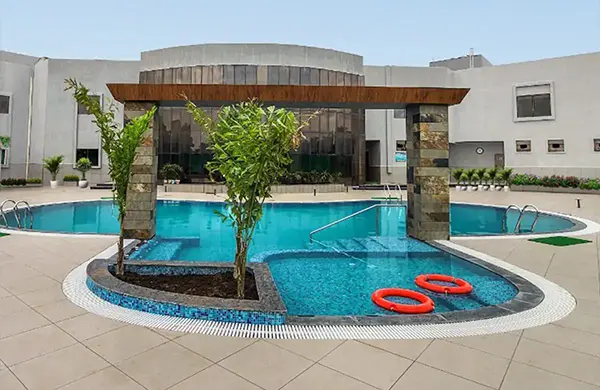
Price and amenities are easy to advertise. Construction quality requires closer inspection.
Two apartments may have similar layouts and finishes in their brochures but differ in the materials, workmanship, and specifications that affect long-term comfort.
What should you inspect?
Look at the quality of:
- Flooring and wall finishes
- Doors, windows, and fittings
- Plumbing fixtures and drainage arrangements
- Electrical fittings and safety provisions
- Waterproofing in wet areas
- Balcony doors and window sealing
- Ventilation and natural light
- Common-area flooring and finishes
- Lifts and building services
- Fire-safety systems and emergency arrangements
For under-construction properties, review the written specifications and ask how changes to materials or brands are documented.
A sample apartment can help you understand the proposed finish, but it may not reflect every detail of the final delivered home. Check the agreement and specifications instead of relying solely on the display unit.
Consider long-term maintenance
A premium finish is not automatically a durable finish.
For instance, a decorative feature may look impressive during a site visit but add little practical value if it requires frequent repairs. Similarly, poor waterproofing or badly sealed windows can create problems that are more expensive to address later.
Construction quality is not always visible during a short visit. Where appropriate, consider an independent technical inspection and ask qualified professionals to assess concerns that require specialist knowledge.
5. Compare Apartment Layouts and Usable Space
A larger apartment is not necessarily a more comfortable apartment.
The way space is planned can affect privacy, movement, furniture placement, storage, ventilation, and everyday convenience.
Understand the difference between area measurements
Before comparing two homes, clarify which area is being quoted.
Common measurements include:
- Carpet area: The net usable floor area of an apartment, as defined under applicable RERA provisions.
- Built-up area: Generally includes carpet area and certain additional areas within the building's construction.
- Super built-up area: A market term that may include a proportionate share of common areas.
These terms are not interchangeable. Compare apartments using the appropriate disclosed area and verify the figures in the project documents.
Examine how each room functions
When visiting the apartments, consider:
- Whether bedrooms can accommodate your furniture
- Whether the kitchen offers sufficient working space
- Whether storage is adequate
- Whether bathrooms are conveniently located
- Whether corridors consume excessive space
- Whether the living and dining areas are practical
- Whether the balcony is genuinely usable
- Whether the layout provides privacy between bedrooms and common areas
For example, a 1,500-square-foot apartment with an efficient layout may feel more spacious than a larger apartment with long passages and awkward room proportions.
Think about your future needs
A couple buying their first home may prioritise a flexible spare room. A family with children may need separate study and sleeping areas. Buyers planning to live in the same property for many years may value accessibility and storage more than decorative features.
Compare the layout against your actual lifestyle rather than judging the apartment by its area alone.
6. Calculate the Total Cost of Ownership
The advertised price is only one part of the financial commitment.
Two residential projects with similar base prices may have different total costs because of floor-rise charges, parking, taxes, maintenance deposits, payment schedules, and other applicable expenses.
Prepare a complete cost comparison
Ask both developers for a written cost sheet that identifies:
| Cost component | What to check |
|---|---|
| Base apartment price | The quoted price and area basis |
| Floor-rise charges | Whether the selected floor attracts a premium |
| Parking | Whether it is included and how it is documented |
| Club or facility charges | Which charges apply and whether they are mandatory |
| Maintenance deposit | The amount, payment timing, and applicable terms |
| Other deposits | Electricity, water, or other applicable deposits |
| Taxes and statutory charges | Charges applicable to your transaction |
| Registration expenses | Applicable stamp duty and registration fees |
| Recurring maintenance | Estimated monthly or annual cost |
| Payment schedule | Instalments, due dates, and conditions |
| Financing costs | Loan processing charges and applicable interest |
The exact charges depend on the project, agreement, and applicable law. Confirm current amounts instead of relying on estimates from advertisements.
Calculate the cost difference
Consider this illustrative example:
- Project A's quoted apartment price is ₹1.20 crore.
- Project B's quoted apartment price is ₹1.16 crore.
- Project B has an additional ₹5 lakh in applicable costs that are not included in its quoted price.
In this example, Project B's total would be ₹1.21 crore before any other unaccounted costs, making it more expensive than Project A's quoted ₹1.20 crore.
These figures are hypothetical and do not represent actual prices or charges for any Satya Group project.
The lesson is simple: compare the complete financial commitment, not just the headline price.
Also assess whether the payment schedule suits your cash flow. A lower price may not be enough to make a project financially suitable if the payment terms create excessive pressure.
7. Assess the Possession Timeline and Construction Progress
The possession date can affect your rent payments, school planning, loan obligations, and moving arrangements.
When comparing an under-construction project with another development, verify the stated timelines and the evidence supporting them.
What should you check?
Review:
- The completion date recorded in applicable project documents
- Current construction progress
- The status of key building services
- The developer's documented delivery history
- The contractual possession terms
- Provisions concerning delay, where applicable
- The status of occupancy or completion certificates when relevant
For a project that appears close to completion, inspect what has actually been completed. Finished external walls do not necessarily mean that utilities, lifts, safety systems, or common facilities are ready.
For under-construction properties, review available RERA disclosures and progress updates. Avoid treating an informal verbal estimate as a guaranteed possession date.
Compare the timeline with your personal plans
If you need a home within a specific period, a project's completion status may be more important than a larger clubhouse or a more impressive entrance.
If you are buying for the long term and can accommodate a longer wait, you may have different priorities.
The right decision depends on both the project's position and your own circumstances.
8. Evaluate Maintenance and Property Management
A residential project's quality is not determined solely by what you see on possession day. It also depends on how the property is maintained over time.
A well-designed development can become less convenient if common areas are poorly managed or essential systems are not maintained properly.
Ask how the property will be managed
Before deciding, clarify:
- Who will manage the common areas?
- What maintenance services are included?
- How are maintenance charges calculated?
- How are complaints recorded and resolved?
- Who maintains lifts, pumps, generators, and safety systems?
- How will common-area repairs be funded?
- What are the arrangements for waste management and water supply?
- Is there a documented process for handover to the residents' association, where applicable?
If possible, speak to residents of the developer's completed projects. Ask about recurring maintenance concerns, response times, water availability, lift reliability, and the condition of common spaces.
Do not compare maintenance costs without checking what each charge covers. One project may include services that another bills separately.
9. Look at Future Resale and Rental Potential
Even if you plan to live in the apartment for many years, it is sensible to consider how easily it might appeal to future buyers or tenants.
Resale and rental demand depend on several factors. No single feature, floor level, or amenity guarantees a particular return.
Examine the factors that influence demand
Compare:
- Access to employment centres
- Road and public transport connectivity
- Nearby schools, hospitals, and markets
- Apartment configuration and usable area
- Quality of construction and maintenance
- Availability of comparable homes nearby
- Current resale listings and actual transaction evidence, where available
- Rental listings and achievable rents for similar apartments
- The project's age, occupancy, and overall condition
Be careful when using advertised resale prices or rental listings. An asking price is not necessarily the price at which a property will sell or rent.
Similarly, a location with significant infrastructure development may offer potential, but future demand is not guaranteed. Verify what exists today and distinguish it from proposed developments.
Consider the buyer pool
A property with a practical layout and access to daily essentials may appeal to a wider range of buyers than one designed around a highly specific preference.
However, the best configuration depends on the local market. Compare similar apartments in the same area rather than assuming that a particular size or floor will always command a premium.
10. Check Water, Power, Ventilation, and Other Essential Services
Some of the most important differences between residential projects are not visible in a marketing brochure.
Essential services affect everyday comfort, particularly in large residential developments.
Water supply and drainage
Ask about the water supply arrangements, storage capacity, treatment systems, and contingency measures. Check how drainage and rainwater management have been designed.
Where relevant, understand the project's approach to water conservation and the maintenance of treatment facilities.
Electricity and backup power
Clarify what backup power is available, which services it supports, and whether charges apply. Do not assume that backup arrangements for common areas automatically cover every appliance inside an apartment.
Lifts and emergency access
In high-rise developments, lift capacity, maintenance, backup power, fire safety, and emergency access deserve careful attention.
Consider how the building would function during peak usage and whether its arrangements suit your household.
Natural light and ventilation
Visit the actual apartment, if possible, at different times of day. Check the direction of the windows, the spacing between buildings, and the effect of nearby structures.
A well-planned apartment can improve everyday comfort without relying on expensive interior changes.
11. Compare the Project's Fit With Your Family's Lifestyle
The better residential project is not necessarily the one with the longest list of amenities. It is the one that supports your daily routine.
A gym may be valuable if you exercise regularly. A large clubhouse may be useful for families who frequently use shared social spaces. But if you spend most of your time commuting, road connectivity and reliable building services may deserve greater weight.
Create a priority list
Divide your requirements into three categories:
Essential:
Requirements you cannot compromise on, such as budget, location, apartment size, legal documentation, or accessibility.
Important:
Features that significantly improve your experience, such as natural light, storage, privacy, or proximity to schools.
Optional:
Extras you would enjoy but do not need, such as a particular view or a specialised recreational facility.
This exercise helps prevent attractive marketing from distracting you from your actual requirements.
Consider your plans for the next five to ten years
Your needs may change after marriage, the arrival of children, a change in workplace, or the decision to accommodate older family members.
Think about whether the apartment and the surrounding neighbourhood will remain practical as your circumstances evolve.
A home should work for your present life without making your future plans unnecessarily difficult.
12. Questions to Ask Before Booking a Residential Apartment
Before paying a booking amount, make sure you have clear answers to these questions:
- What is the complete cost of the apartment, including applicable additional charges?
- What carpet area and apartment configuration are documented?
- Are the project's relevant approvals and RERA details available for verification?
- What is the contractual possession date?
- What construction specifications are included in the agreement?
- Which facilities are included, and which carry additional charges?
- What are the expected maintenance costs?
- How are water supply, electricity backup, lifts, and fire safety managed?
- What are the cancellation, refund, and payment-default terms?
- What arrangements exist for reporting defects and resolving maintenance issues?
Ask for important commitments in writing. If an answer affects your purchase decision, do not rely solely on verbal assurance.
How Satya Group Approaches the Homebuying Decision
At Satya Group, we recognise that choosing a home involves more than comparing prices and amenities. Buyers also need to consider location, apartment planning, connectivity, project documentation, specifications, and their long-term living requirements.
For anyone exploring residential options in Gurgaon, it is worth comparing projects against a consistent set of criteria before making a decision.
You can exploreresidential homes from Satya Group to understand the available options. Buyers interested in the Dwarka Expressway corridor can also learn more aboutSatya Levante in Sector 104, Dwarka Expressway.
Every homebuyer has different priorities. We encourage buyers to review project details, understand the applicable terms and charges, and assess the property against their own needs before proceeding.
Final Thoughts
Comparing two residential projects requires more than looking at the base price, clubhouse, swimming pool, or number of amenities.
Location, legal documentation, developer performance, construction quality, apartment layout, total ownership costs, possession commitments, maintenance arrangements, and future market appeal can all influence your decision.
Start by identifying your non-negotiable requirements. Verify the documents, visit both locations, inspect the apartments, compare the complete cost sheets, and use a weighted scorecard to assess the evidence.
The best residential project is not automatically the cheapest or the one with the most facilities. It is the one that meets your practical requirements, fits your finances, and supports your long-term plans.
A little more research before booking can help you make a more confident and informed homebuying decision.
Frequently Asked Questions
1. How do I compare two residential projects before buying a flat?
Compare location, legal approvals, developer track record, construction quality, apartment layout, total ownership cost, possession timeline, maintenance, and resale or rental considerations. Visit both projects and verify important claims through official documentation.
2. What is more important when buying a home: price or location?
Both matter, but their importance depends on your budget and lifestyle. Location affects daily commuting, access to services, and potential demand, while price determines affordability. Compare the total cost alongside the practical benefits of each location.
3. How can I check whether a residential project is legally approved?
Review its applicable RERA registration, land and title documents, approved plans, relevant licences, and other permissions. Check official records and seek independent legal advice when necessary.
4. Should I buy a ready-to-move or under-construction apartment?
A ready-to-move apartment lets you inspect the actual property and assess its immediate surroundings, subject to verifying the required certificates and documents. An under-construction apartment may offer different payment arrangements or unit choices, but its completion timeline and contractual terms require careful review.
5. How do I calculate the actual cost of buying an apartment?
Include the base price, applicable floor-rise charges, parking, taxes, registration expenses, maintenance deposits, other applicable charges, and financing costs. Request a written cost sheet from the developer and verify the amounts before booking.
6. Does a developer's reputation guarantee project quality?
No. A developer's track record can provide useful evidence, but it does not guarantee the quality or delivery of a new project. Review the specific project's approvals, construction progress, written specifications, contractual terms, and available buyer feedback.
7. What should I check during a residential site visit?
Check access roads, the surrounding neighbourhood, construction progress, apartment layout, natural light, ventilation, visible finishing quality, parking, lifts, water supply, and essential services. Ask for supporting documents where a feature or commitment cannot be verified through a visit.
8. How can I assess a project's future resale value?
Review comparable properties, local connectivity, demand, apartment configuration, project maintenance, and available resale evidence. Remember that asking prices and projected returns do not guarantee actual resale values or future appreciation.
9. Are amenities important when comparing residential projects?
Yes, but their value depends on how often you expect to use them and whether they justify their cost. Compare the quality, availability, maintenance arrangements, and charges for facilities instead of relying only on the number of amenities advertised.
10. Is a residential project scorecard useful?
Yes. A scorecard helps you compare projects consistently across factors such as location, documentation, quality, layout, cost, and possession. However, serious legal, safety, or affordability concerns should be resolved separately rather than offset by a high overall score.