

How to Choose the Right Floor When Buying an Apartment in Gurgaon
 How to Choose the Right Floor When Buying an Apartment in Gurgaon
Introduction
Buying an apartment is a significant decision. You consider the location, apartment size, budget, amenities, connectivity and the reputation of the developer. But there is another choice that deserves equal attention: which floor should you choose?
Some homebuyers prefer lower floors because they offer convenient access to the entrance, podium or outdoor areas. Others prefer higher floors for their views, privacy and reduced exposure to street-level activity. Neither option is automatically better. The right choice depends on your lifestyle, family requirements, budget and the design of the residential development.
At Satya Group, we believe that a well-informed homebuying decision starts with understanding how a property will serve you in everyday life. A beautiful apartment should work for your morning routine, family time, commute and long-term plans—not just look impressive during a site visit.
In this guide, we explain how to choose the right floor when buying an apartment in Gurgaon, what to check before booking and how to balance comfort with financial considerations.
1. Why Does Floor Selection Matter?
The floor you choose can influence several aspects of your daily experience, including natural light, ventilation, privacy, noise exposure and access to shared facilities.
For example, a lower-floor apartment may suit a family that values quick access and wants to avoid depending heavily on lifts. A higher-floor apartment may appeal to someone who prioritises an elevated outlook and greater separation from street-level activity.
However, floor number alone does not determine the quality of a home. Two apartments on the same floor can offer very different experiences because of their orientation, surrounding towers, window placement, layout and proximity to lifts or common areas.
Gurgaon also has a wide variety of residential developments, from established communities to modern high-rise projects along growing infrastructure corridors. As a result, buyers should assess the individual apartment and its wider surroundings rather than follow a universal rule.
2. Low Floor vs High Floor Apartments
Before making a decision, compare the practical benefits and trade-offs of each option.
| Factor | Lower Floors | Higher Floors |
|---|---|---|
| Accessibility | Usually quicker to reach from the entrance | Greater dependence on lifts or stairs |
| Views | More influenced by nearby buildings and landscaping | May offer broader views, depending on the surroundings |
| Privacy | May have more exposure to pedestrian activity | Often offers greater separation from street-level movement |
| Noise | Can be more exposed to roads, entrances and activity areas | May reduce some street-level noise, though this is not guaranteed |
| Natural light | Depends on orientation, nearby structures and landscaping | Can receive more direct sunlight, depending on tower placement |
| Emergency access | May allow easier stair access | Requires greater consideration of evacuation arrangements |
| Daily convenience | Can be useful for families with young children or older residents | May suit buyers who prioritise views and an elevated setting |
| Price | May have a lower quoted price in some projects | May attract additional floor-rise charges |
| Maintenance concerns | Exposure to landscaping, insects or common-area activity may be relevant | Wind exposure, lift dependence and balcony safety deserve attention |
These are general tendencies, not guarantees. A well-planned lower-floor apartment may receive better daylight than a higher-floor unit facing another tower. Similarly, a higher floor does not automatically provide silence or an uninterrupted view.
Review the actual floor plan, site layout and apartment orientation before deciding.
3. Advantages of Living on a Lower Floor
Lower floors can be a practical choice for buyers who value easy access and a straightforward daily routine.
Convenient access
Reaching the entrance, parking areas or shared facilities may take less time from a lower floor. This can be helpful when carrying groceries, managing deliveries or travelling frequently.
It can also reduce inconvenience when lifts are busy or temporarily unavailable. However, the actual benefit depends on the tower layout and the location of the apartment relative to the lifts and exits.
Suitable for families and older residents
Families with toddlers, residents who have mobility limitations and older adults may prefer shorter stair routes and less dependence on lifts.
If accessibility is a priority, check the distance to the lift lobby, the availability of accessible routes and the arrangements for emergency evacuation. Do not assume that a lower floor alone guarantees accessibility.
Potentially useful for outdoor access
Some residential developments feature landscaped podiums, gardens or shared outdoor spaces. Depending on the building design, certain lower-floor apartments may offer convenient access to these areas.
However, proximity to a garden or podium can also mean more pedestrian movement. Check the actual location and privacy of the apartment before booking.
A possible budget advantage
Some projects price lower floors differently from higher floors. If the lower-floor unit has a suitable layout and orientation, it may offer a better fit for your budget.
Compare the complete cost sheet rather than relying only on the advertised base price.
What should you check?
Lower floors may experience more activity from entrances, roads, parking areas or shared spaces. Depending on the site's design, they may also receive less direct sunlight because of nearby structures.
Visit the apartment or review its orientation and surrounding layout to understand these trade-offs.
You May Also Like: How Infrastructure Development Impacts Residential Property Demand in Gurgaon
4. Advantages of Living on a Higher Floor
Higher floors appeal to buyers who value privacy, elevated views and separation from some forms of ground-level activity.
Better views, depending on the surroundings
An elevated apartment may provide a wider view of the city, landscaped areas or the surrounding skyline. This can make the home feel more open.
Still, the view depends on the tower's position, neighbouring buildings and future development around the property. An attractive view today is not necessarily permanent.
Before booking, ask what lies in front of the apartment and whether any nearby plots may be developed in the future.
Greater separation from street-level activity
Higher floors may reduce exposure to certain types of street-level noise, dust and pedestrian movement.
However, sound can travel vertically, and noise from construction, traffic, mechanical equipment or neighbouring apartments may still be noticeable. Check the apartment at different times of the day where possible.
Natural light and ventilation
An apartment on a higher floor may receive more daylight if nearby structures do not block its windows. Wind exposure may also differ with height.
Yet good ventilation depends on window placement, orientation, room layout and the surrounding buildings. Floor number alone cannot confirm that an apartment will be bright or well ventilated.
A sense of privacy
Higher floors often offer greater separation from people moving around the entrance, gardens and podium areas. This may appeal to buyers who prefer a quieter residential setting.
Check the distance between neighbouring towers, the alignment of balconies and the visibility from nearby apartments.
Points to consider
Higher floors usually involve greater reliance on lifts. Ask about lift availability, power backup, maintenance arrangements and emergency procedures.
Also review the apartment's price breakdown. A higher floor may carry an additional charge, so determine whether the views, orientation and other benefits justify the total cost.
5. Seven Factors to Consider Before Choosing a Floor
The right floor depends on more than height. Use the following factors to compare apartments objectively.
5.1. Location and connectivity
Start with the location of the residential project. Consider your daily commute, access to major roads, public transport, schools, healthcare facilities and shopping areas.
Gurgaon offers several residential corridors, each with its own connectivity advantages and development patterns. Dwarka Expressway, for example, connects parts of Gurugram with Delhi and provides access towards IGI Airport. However, the convenience of a particular address depends on the exact location, access roads and your regular destinations.
At Satya Group, Satya Levante Residences is located in Sector 104 along Dwarka Expressway. When evaluating a home in a development such as Levante Residences, consider the location alongside the specific apartment's floor, orientation, layout and price—not as a substitute for those checks.
5.2. Natural light and ventilation
Natural light can make a home feel more welcoming and reduce the need for artificial lighting during the day. Ventilation also contributes to indoor comfort.
When comparing apartments, check:
- The direction in which the main rooms and balconies face.
- Whether another tower blocks the windows.
- The position and size of windows.
- The distance between neighbouring buildings.
- Whether the apartment receives direct sunlight at times that suit your routine.
If possible, visit at different times of the day. A quick midday visit may not reveal how much morning or evening sunlight the apartment receives.
5.3. Noise and privacy
Consider what happens around the apartment, not just how high it sits.
A lower-floor home near the entrance, driveway or shared outdoor area may experience more movement. A higher-floor apartment may have less exposure to some street activity but could still face noise from construction or neighbouring homes.
During a site visit, pay attention to the lift lobby, service areas, roads, nearby commercial activity and the distance between towers.
5.4. Lift availability and power backup
In a high-rise residential building, lift performance is part of everyday convenience.
Ask the project representative about the number and type of lifts serving the tower, the lift layout, maintenance arrangements and the applicable power-backup provisions. Understand which services are covered during a power interruption and what limitations apply.
Also review the building's fire safety arrangements, designated staircases and emergency procedures. These details matter particularly when you are considering a higher-floor apartment or buying a home for older family members.
5.5. Tower layout and amenities
The overall planning of a residential community can influence your experience as much as the apartment itself.
Check the distance to the entrance, parking, clubhouse, landscaped areas and other shared facilities. An apartment close to an amenity may be convenient, but it may also experience more activity.
For example, a family that frequently uses shared recreational spaces may value proximity to those facilities. A buyer who prefers privacy may choose an apartment farther away from busy common areas.
Look at the master plan and tower layout to understand the relationship between your apartment and the surrounding spaces.
5.6. Total cost and floor-rise charges
The apartment's floor can affect its quoted price in some projects. Before making a decision, request a written cost sheet that identifies the base price, any applicable floor-rise charges and other costs.
Compare apartments with similar configurations and understand the final payable amount. Do not assume that every project follows the same pricing structure.
The cheapest unit is not automatically the best value, and the most expensive floor is not automatically the best investment.
5.7. Documents, approvals and future plans
Before booking, review the relevant project documents, agreement terms, specifications and disclosures. Verify the project's registration and available information through the official Haryana Real Estate Regulatory Authority (HRERA) website.
You should also ask about the apartment's exact specifications, possession or construction status, applicable charges and any relevant restrictions.
For a long-term purchase, examine the surrounding area as well. Existing infrastructure, proposed development and local access can influence convenience, but future plans should not be treated as guaranteed outcomes.
6. Understanding Floor-Rise Charges in Gurgaon
Floor-rise charges are additional amounts that some residential projects apply to apartments on selected floors. The structure varies by project, so buyers should confirm the applicable terms rather than assume a standard rate.
Before paying a booking amount, ask for a written explanation of:
- The base price of the apartment.
- Any floor-rise charge and how it is calculated.
- Additional charges applicable to the selected unit.
- Taxes, statutory charges and registration-related expenses, as applicable.
- The payment schedule and conditions in the agreement.
Compare the total cost of two or three suitable apartments. For example, a higher-floor unit may offer a view you prefer, while a lower-floor unit may provide easier access at a lower quoted price. The decision should reflect the actual difference in cost and the value you place on each feature.
Also consider your holding period. If you plan to live in the apartment for many years, daily comfort may carry more weight than a small difference in the initial price. If you are buying for investment, consider rental demand, overall purchase cost, likely maintenance expenses and the property's location.
Important: Do not assume that a higher floor will always command a higher resale price. The outcome depends on the property, demand, condition, layout, view, pricing and market conditions when you sell.
You May Also Like: Why Choose Dwarka Expressway Over SPR and Golf Course Extension Road?
7. Which Floor Is Best for Different Homebuyers?
There is no single answer to the question, "Which floor is best for an apartment?" Your requirements should guide the choice.
For families with young children
Prioritise safety, practical access, balcony design, window safety and proximity to shared facilities. Review the building's child-safety provisions and ensure that doors, windows and balconies meet your family's needs.
A lower or middle floor may be convenient for some families, but the apartment's layout and safety features matter more than the floor number alone.
For older residents
Look at lift reliability, accessible entrances, emergency arrangements and the distance to essential facilities. A lower floor may reduce dependence on lifts, but only if the building provides practical and safe access.
Consider the resident's mobility needs before deciding.
For working professionals
If you spend long hours at work or travel frequently, consider commute time, lift convenience, noise, daylight and the ease of receiving deliveries.
A higher floor may suit someone who values views and privacy, while a lower or middle floor may better fit someone who prefers faster access. The best option depends on the building and your routine.
For luxury homebuyers
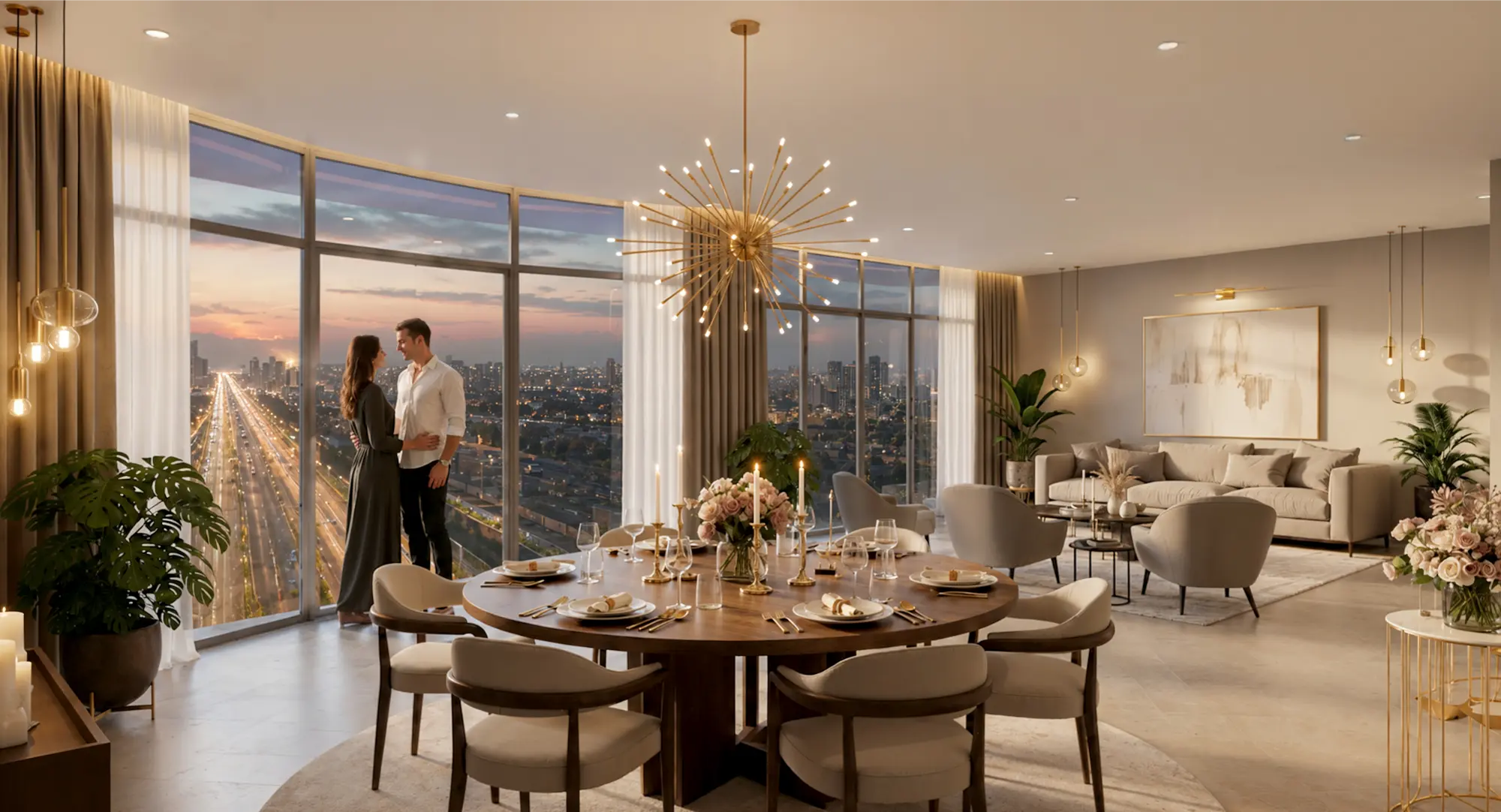
In a luxury apartment, the overall experience matters more than the floor number alone. Evaluate room proportions, natural light, orientation, privacy, balcony usability, views and the relationship between the apartment and shared facilities.
At Satya Group, our residential offering includes Satya Levante Residences in Sector 104, Gurugram, with 3 BHK + Utility, 4 BHK + Utility and 5 BHK + Utility configurations. Buyers considering the project should assess the available apartment's actual layout, floor, orientation, applicable pricing and documented specifications before choosing a unit.
For property investors
Investors should assess the full financial picture. Consider the location, connectivity, tenant preferences, apartment configuration, total acquisition cost and expected holding period.
A higher floor may appeal to some tenants, while others may prioritise a lower floor for accessibility. Rental demand varies by location and tenant profile, so avoid assuming that one floor category will always deliver better returns.
Review comparable properties and base your decision on evidence rather than the floor number alone.
8. Vastu Considerations for Apartment Floor Selection
Some homebuyers consider Vastu Shastra when choosing a home. If Vastu is important to your family, include it in your selection process alongside practical considerations.
You may wish to review the apartment's orientation, entrance, room arrangement, kitchen location and natural light. Different practitioners may offer different interpretations, so clarify your preferences before narrowing down your options.
There is no universally accepted floor number that guarantees a better home under Vastu principles. Avoid choosing a floor solely because someone describes it as universally lucky or unlucky.
Your final decision should balance personal beliefs, budget, layout, safety, comfort and the actual features of the apartment.
9. A Practical Checklist Before Booking
Before finalising your apartment, use this checklist to compare your preferred floors.
- Budget: Have you compared the total cost, including applicable floor-rise charges and other expenses?
- Orientation: Do you understand the apartment's direction and window placement?
- Natural light: Does the apartment receive suitable daylight for your needs?
- Ventilation: Have you checked window placement and airflow?
- View: Is the view satisfactory, and have you considered nearby development?
- Noise: Have you assessed the surrounding roads, common areas and construction activity?
- Accessibility: Is the apartment convenient for everyone who will live there?
- Lifts: Have you checked lift access, maintenance and power-backup provisions?
- Safety: Have you reviewed fire safety information, emergency exits and balcony or window safety?
- Amenities: Are shared facilities conveniently located without creating unwanted disturbance?
- Documents: Have you reviewed the relevant approvals, registration details and agreement terms?
- Future plans: Does the apartment suit your likely needs over the next several years?
If possible, visit the property more than once. Take notes and compare apartments against the same criteria. This makes it easier to distinguish genuine advantages from features that simply look attractive during a sales visit.
Conclusion
Choosing the right floor is an important part of buying an apartment in Gurgaon, but it should never be an isolated decision. A higher floor may offer a view you love, while a lower floor may provide the everyday convenience your family needs. Both can be suitable when the apartment meets your priorities.
Start with your budget and lifestyle. Then compare the unit's orientation, natural light, ventilation, privacy, accessibility, amenities, floor-rise charges and relevant documents. Review the location and surrounding infrastructure, too, because the wider residential environment contributes to your experience over time.
At Satya Group, we encourage homebuyers to look beyond floor number and evaluate the complete home: its layout, location, usability and fit with their long-term plans.
The right apartment is not necessarily the one on the highest floor. It is the one that makes sense for you today and continues to serve your needs in the years ahead.
Explore Satya Group's residential developments:https://www.satyagroups.in/
For project registration and regulatory information:https://haryanarera.gov.in/
Frequently Asked Questions
1. Which floor is best to buy a flat in Gurgaon?
There is no universally best floor. Lower floors may offer easier access, while higher floors may provide better views or greater separation from street-level activity. Compare the apartment's orientation, layout, price, accessibility and building facilities before deciding.
2. Is a higher-floor apartment better than a lower-floor apartment?
Not necessarily. Higher floors may offer advantages in privacy and views, while lower floors may be more convenient for some families and older residents. The better choice depends on the building's design and your daily requirements.
3. Do higher floors cost more in Gurgaon?
Some projects apply floor-rise charges to selected floors, while others may follow different pricing structures. Request a current, written cost sheet for the specific apartment and compare the total payable amount.
4. Which floor is best for families?
Families should prioritise safety, accessibility, room layout, lift availability and proximity to shared facilities. The most suitable floor depends on the ages and mobility needs of family members and the design of the residential community.
5. Does a higher floor have better natural ventilation?
Not always. Ventilation depends on window placement, apartment orientation, surrounding towers and the building's design. Visit the apartment and assess its actual airflow and daylight rather than relying on floor height alone.
6. Does floor selection affect resale value?
It can influence buyer preferences, but it does not determine resale value by itself. Location, apartment condition, configuration, layout, views, total cost and market demand also matter.
7. What should I check before buying an apartment on a higher floor?
Check lift availability, power-backup provisions, fire safety arrangements, emergency staircases, window and balcony safety, noise levels, orientation and the total price. Review the relevant project documents before booking.
8. Should I follow Vastu when choosing an apartment floor?
If Vastu matters to your family, you can include it among your preferences. However, there is no universally accepted rule that makes one floor number the best for every buyer. Balance your preferences with practical requirements, safety, budget and apartment design.